And Saudi Arabia might deserve some of the credit.
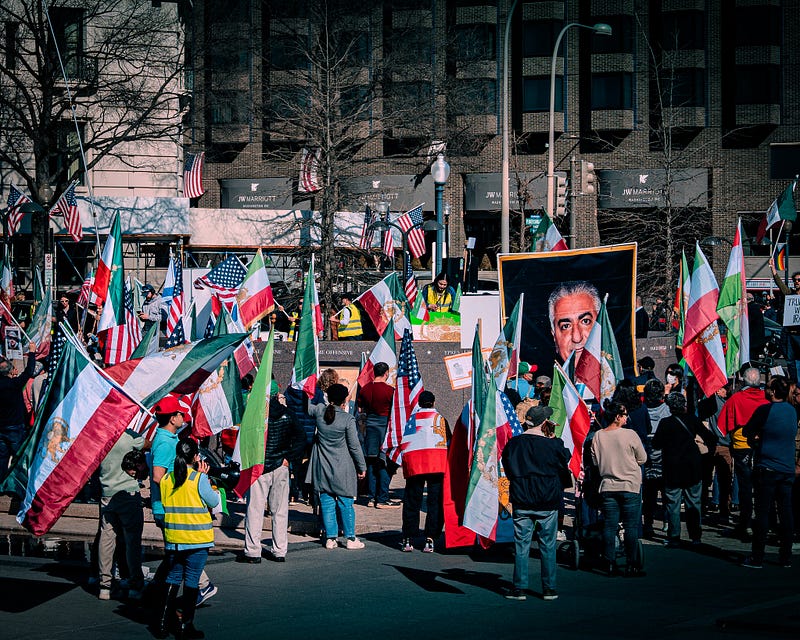
Something historic has happened in Iran, and everyone knows it, even if nobody is quite sure what to call it yet. Or what is going to happen next.
Regime change? Succession crisis? Maybe it becomes a long, bloody internal power struggle dressed up by new leadership as continuity. But the old order is broken. Former Supreme Leader Ali Khamenei is dead after U.S.-Israeli strikes — along with many of his top lieutenants.
Iran is being run by a temporary leadership mechanism, and the Islamic Republic is trying to project strength while absorbing the biggest shock to its system in decades.
That is not business as usual. That is the beginning of something new. All media eyes are currently focused on President Donald Trump (as usual) — but if you really want to understand how we got here, you have to stop looking only at Washington and Jerusalem and start looking harder at the subtle machinations of Riyadh.
Because Saudi Arabia’s role in this story has not been loud. It has been so very careful. Strategic. Patient. The kingdom has spent years shaping the region while assiduously avoiding public credit for it.
Start with the Abraham Accords in 2020. Saudi Arabia did not sign them, but it did not try to destroy them either. That mattered. A regional realignment of that size does not move forward in the Gulf without Saudi calculation behind it.
Even then, Riyadh understood what many Western analysts were still pretending not to understand: the center of gravity in the Middle East had shifted. Iran — not Israel — was the central destabilizing force in the region for many Arab governments. Reuters reported after October 7 that the Hamas attack was widely seen as aimed, in part, at disrupting Saudi-Israeli normalization. That only makes sense if normalization was already strategically important.
Consider the great illusion of the Biden years: the idea that Iran could be managed through a combination of pressure relief, diplomatic choreography, and wishful thinking. Saudi Arabia never seemed especially interested in that vision. The U.S.-Saudi relationship under Biden was visibly strained — notably, over America’s broader Iran posture. That matters, because Riyadh was signaling, in its own way, that it did not share the administration’s underlying assumptions.
True, Saudi Arabia also reopened diplomatic relations with Iran in 2023 in a China-brokered deal. But it was not some grand Saudi conversion to the religion of coexistence. It was a hedge. A pause. A way to reduce immediate exposure while the kingdom pursued its own economic modernization and tried to keep missiles away from its infrastructure. Reuters’ reporting at the time made clear that Riyadh and Tehran were restoring ties after years of hostility, not becoming friends. Saudi Arabia was buying space, not buying into Iran.
That is what makes the current moment so interesting.
Publicly, Saudi Arabia has struck a neutral/sympathetic-to-Iran posture during the last two months. Reuters reported in January that Saudi Arabia was among the Arab states urging against U.S.-Iran escalation, and that Saudi Crown Prince Mohammed bin Salman told Iran’s president Saudi airspace would not be used for military action against Tehran. That is the public record. Riyadh did not want to be seen as the gasoline can at the bonfire.
But then the Washington Post reported something much more revealing today: that Mohammed bin Salman was privately pressuring President Trump to strike Iran, even while outwardly backing diplomacy. That specific claim is still just that — a major report, not yet independently matched by Reuters or AP in public reporting. But if it holds up, it would not feel shocking. It would feel like the Saudi playbook. Say “stability” in public. Pursue a balance-of-power strategy in private. Smile at the negotiating table while moving the chessboard under it.
So what role did Saudi Arabia play in the fall — or fracture — of the old Iranian order?
Probably not the starring role. But very likely an important supporting one.
Saudi Arabia helped normalize the regional idea that Iran was the problem. It quietly tolerated and perhaps encouraged a broader Arab-Israeli alignment against Tehran’s network of proxies. It refused to let itself be emotionally blackmailed into siding with Iran after Hamas’ October 7 attack. It never truly bought the Biden administration’s softer assumptions about Tehran. And if the Post is right, it may have concluded behind the scenes that the time had come to stop containing Iran and start breaking its strategic position.
Now comes the harder question: what role will Saudi Arabia play in whatever Iran becomes next?
The answer may be less dramatic and more consequential over the long term. Saudi Arabia is unlikely to try to “build democracy” in Iran or sponsor some American fantasy of instant liberal transformation. That is not how the kingdom thinks. What Riyadh wants is simpler: an Iran that is weaker, more inward-looking, less ideological, less revolutionary, and much less capable of ruling the region through proxies and terror.
That means Saudi Arabia’s real role in a post-Khamenei Iran is likely to be economic and diplomatic, not theatrical. Saudi Arabia is already central to stabilizing oil markets as the war rattles energy flows; Reuters reports it boosted output and exports in anticipation of Iran-related disruption. That gives Riyadh leverage.
Beyond that, Saudi Arabia could become one of the Arab powers that helps determine whether a future Iran is frozen out, cautiously reintegrated, or kept at arm’s length unless it gives up the habits that made it dangerous in the first place. It would follow from Saudi behavior for years now: reduce chaos, protect trade, contain Iran, move on.
In other words, Saudi Arabia probably does not want to own the new Iran.
It wants to shape the environment around it.
It wants an Iran that stops exporting militias, stops threatening Gulf shipping, stops setting Lebanon, Syria, Iraq, and Yemen on fire, and stops imagining itself as the revolutionary command center of the Middle East.
That is not a small ambition.
And if this really is a new era in Iran, don’t be surprised if history shows that Saudi Arabia had more to do with ushering it in — and more to do with shaping what comes after.
(Contributing writer, Brooke Bell)